

Nobody wants to be the first to clap.
Nobody dares break the silence until someone everyone admires starts clapping.
Then, of course, everybody joins in. Just like at the theatre.
All that’s missing is a man standing in the aisle holding up a sign that reads: APPLAUSE.
They only recognise a good idea once they’ve checked whose name is on it.
—Oh, yes. Mmmm. It’s by Fulanito (Spanish for so-and-so). Good stuff.
Sometimes I read an essay by someone I genuinely admire. Someone who, when they speak, actually manages to make me shut up and listen.
And then they publish something blindingly obvious.
An obvious statement. In every sense of the word.
Cue the reviews:
—Brilliant. Essential. A revolutionary perspective.
—Changed my life as much as intermittent fasting, acupuncture and running.
If a complete unknown had written it, would they still call it brilliant?
And the other way round:
If I’d liked an idea and everyone else said it was shit, would I have the ovaries to keep defending it on my own?
Same thing happens at parties (and with rebrands).
Some people wait to see what music gets everybody else moving before deciding they like it.
Others need to announce that the DJ is rubbish to prove their exquisite taste.
Now. Come with me.
Zoom in.
They’re both watching the same thing: the audience.
One wants to belong. The other wants to stand apart.
The Greek tragedy is that neither is actually listening to the music.
Being the outsider who doesn’t dance doesn’t make you interesting. Or right. Especially if, after trashing the DJ, you haven’t got a single banger to put on instead.
And here’s my contradiction.
I’m stubborn. Stubborn as a mule.
The Saturn-in-retrograde crowd will tell you it’s because I’m a Taurus. I know it’s because I’m exactly like my father.
According to my mother, who’s known me since before I knew myself, my approach to life is o gano o empato (I either win or draw).
It takes a hell of a lot for me to give an inch.
I hate losing. And anyone who says it’s the taking part that counts is probably behind on the scoreboard.
Which is why, when someone proves their argument is better than mine, I shut up and change my mind.
“Because I said so” doesn’t cut it. I want to see the scaffolding. What have you seen that I haven’t yet?
Some people call that weakness.
—You change your mind more often than you change your shirt.
Nope. Not at all.
It’s calculation.
I’m short-sighted, not thick.
Losing would be digging my heels in out of pride. Losing would be applauding something painfully obvious just because Fulanito’s name is on it.
If your argument takes mine apart, I’ll take it. And now I think better than I did ten minutes ago.
Antonio Escohotado, the Spanish philosopher and thinker, used to say that the point of studying is to change your mind. That we should cultivate a culture of discovery.
Not to be right all the bloody time. That’s agotador, exhausting. But to recognise the thing that knocks you off your axis. Even if you have to drag your ego back by the leash.
That’s why I’m not looking for consensus. Give me disagreement. But bring your arguments, please.
Yesterday, over coffee on the other side of the Atlantic, I was talking about this with a strategist I admire. We agreed on something: the truth is better.
Not necessarily prettier. Or easier to swallow. It’s not a gummy. Though it should be.
Your client might not be ready for it. Neither might your partner. Or your ex.
Some clients hire you to clap.
—Oh, yes! Wonderful! Keep going!
And yes, of course, I’m not naive. Applause pays the bills too. I’m not going to pretend otherwise. But pour enough sugar into the truth to sweeten someone else’s mood and sooner or later you won’t be able to taste a damn thing.
We go around acting like adults, then treat each other like children.
—Look at the sticker on my forehead!
Strategy gets the same treatment.
And if you make a living from ideas, there’s a part of the job you’d better start practising sooner rather than later: saying what needs to be said. And standing by it.
Holding the line.
Even if the client doesn’t clap at slide 17. Even if your partner spends the next month sulking.
I’m more scared of decaf truth than AI. There, I said it.
Because when everyone around the table says amén, nobody wants to be the one to say:
—Wrong hand. This is a fucking mess.
Heaven forbid we ruin the mood.
So we choose a naive, kindergarten-meeting kind of consensus over an uncomfortable truth. We avoid the argument. We keep smiling. Lovely meeting, everyone.
Until a piano drops from the eleventh floor.
And the brand bleeds out on the ground.
—It was a terrible accident. The market. Social media. The ads.
Well.
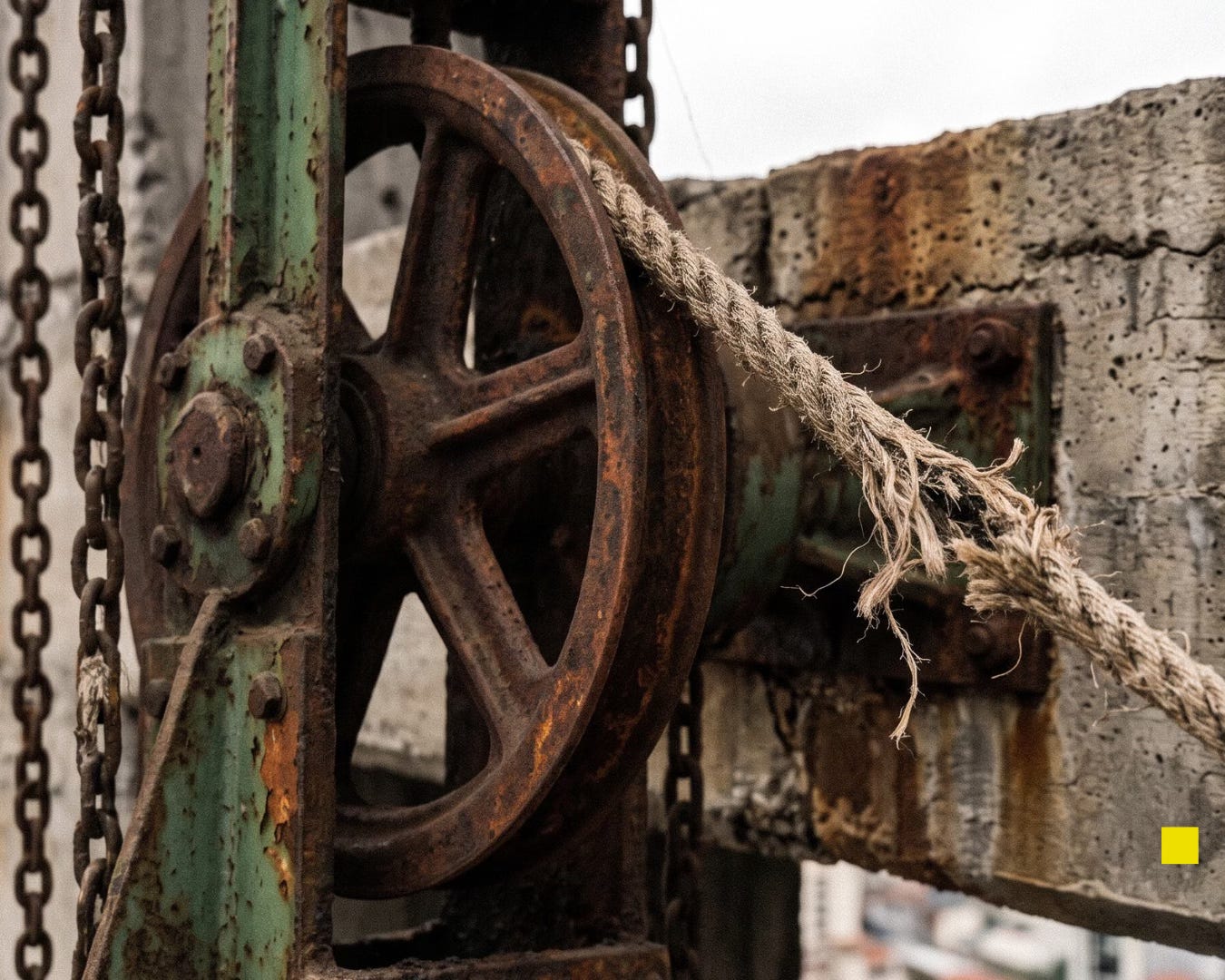
The pulley rope was creaking long before it snapped.
You just didn’t want to hear it.
So if tomorrow I find a lens that makes the one I’m using today look ridiculous, donde dije digo, diré Diego.
A Spanish way of saying I’ll change my tune. And I’ll have no problem admitting it.
O gano o empato. I either win or draw.
And if you still think looking further ahead and knowing when to pull back isn’t strategic, well, keep clapping.
You might not even notice you’re losing.
Lines Aja
Brand Strategist & Verbal Identity Consultant — Las Musas®
weareprimos.com
De lo mejor que te he leído, probablemente porque estoy muy de acuerdo. Aunque también disfruto sometiendo mis argumentos a prueba y no tengo reparo en abandonarlos cuando encuentro otros mejores, jejeje, también es agradable encontrar argumentos que coinciden con los míos.
Llevo tiempo pensando en lo que dices al principio. La verdad es evidente, pero luego nadie la admite. Por eso dudo mucho de los consejos sobre marca. Lo que veo es que llega un punto en que la marca se convierte en eso que todos aplauden y conseguirlo parece ser lo importante. Es verdad que algunas lo olvidan y lo pagan caro, pero son menos.
Pienso en lo que dice Seth Godin sobre los early adopters. Alguien con criterio de verdad, no de los que anuncian que lo poseen, sino de quienes lo demuestran con sus elecciones. Imagino que son personas seguras, capaces de aplaudir porque el espectáculo realmente las ha conmovido. Luego, según mis cuentas, al ser personas seguras, es más probable que el resto las siga. Siempre hemos delegado decisiones y criterio, que alguien realice el difícil trabajo de elegir y arriesgarse con su elección, mientras el resto lo seguimos sin asumir los inconvenientes del riesgo.
Pero hay una nueva dificultad, ese crítico casi ha desaparecido y, bueno, la IA ha ido llenando ese espacio.